 India
India  UAE
UAE  Saudi
Saudi  Oman
Oman  Kuwait
  Bahrain
  Qatar
Qatar 
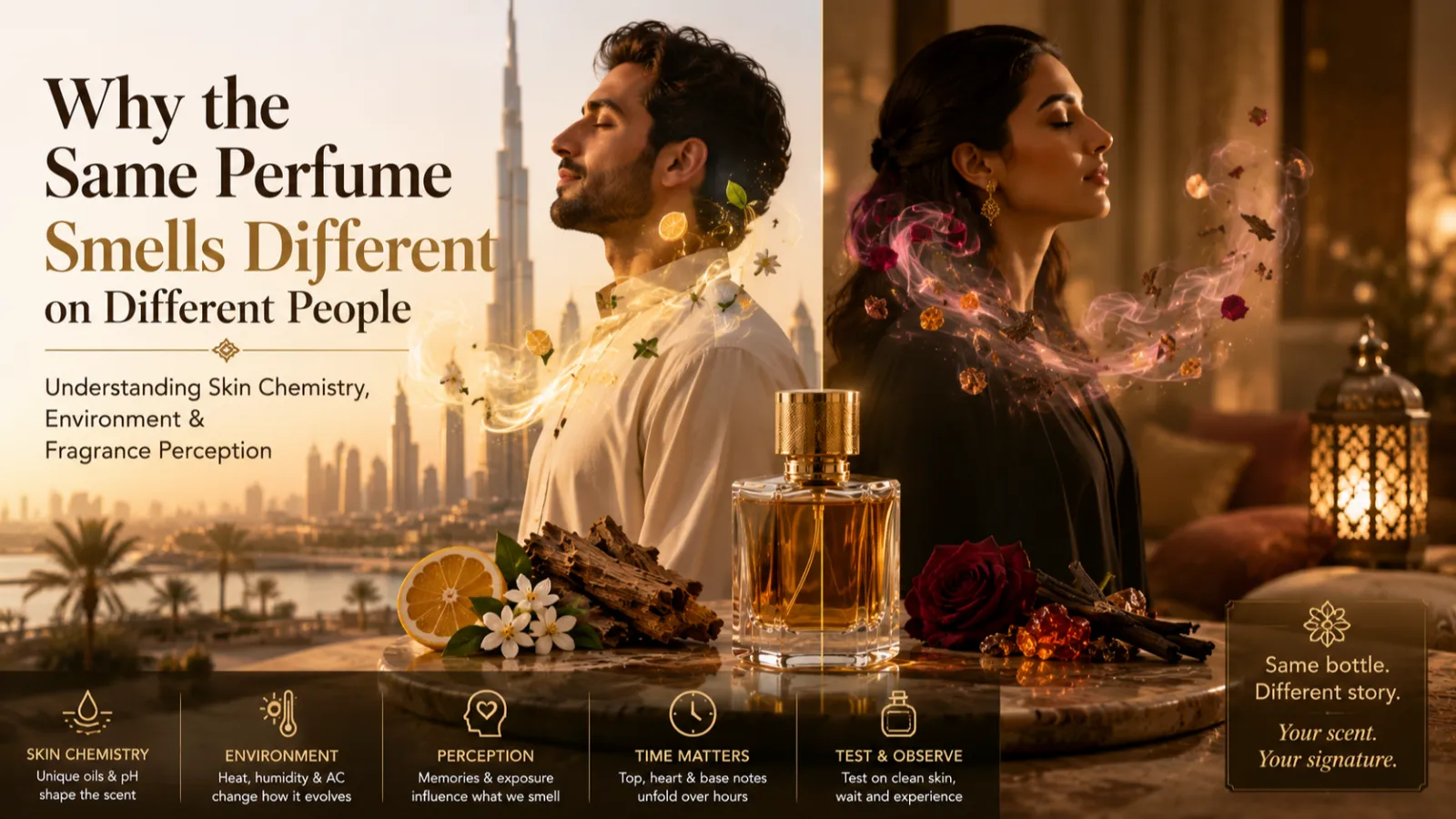
Two people can wear the same perfume and notice different details. The formula has not changed, but the surface, temperature, moisture and surrounding smells all affect what reaches the nose. This guide looks at how skin, environment and perception shape fragrance in a practical way, with advice that works for daily life in the UAE rather than only at a perfume counter.
Personal perception matters too. Familiar materials can trigger memories, and repeated exposure can make the wearer stop noticing a scent that remains clear to everyone else. If you are comparing options, you can view Oud Zayed and use the ideas below to narrow the choice without rushing.
Begin with the way fragrance actually develops
For skin chemistry and perfume, the first spray is an introduction, not the whole story. Alcohol lifts quickly and the brightest materials usually appear first. As those fade, the composition moves into its heart and then a quieter base. Heat, moving air and skin moisture can speed up or soften that journey. This is why a perfume that seems sharp in the opening may become smooth twenty minutes later, while an attractive burst of freshness may disappear sooner than expected.
Give every serious test time. Apply to clean skin, note the time and resist adding another scent to the same arm. Check it after thirty minutes, around two hours and again near the end of the day. These simple checkpoints reveal comfort, character and performance more honestly than a crowded blotter. They also make it easier to understand skin chemistry and perfume without relying on sales language.
Use the UAE climate as part of the decision
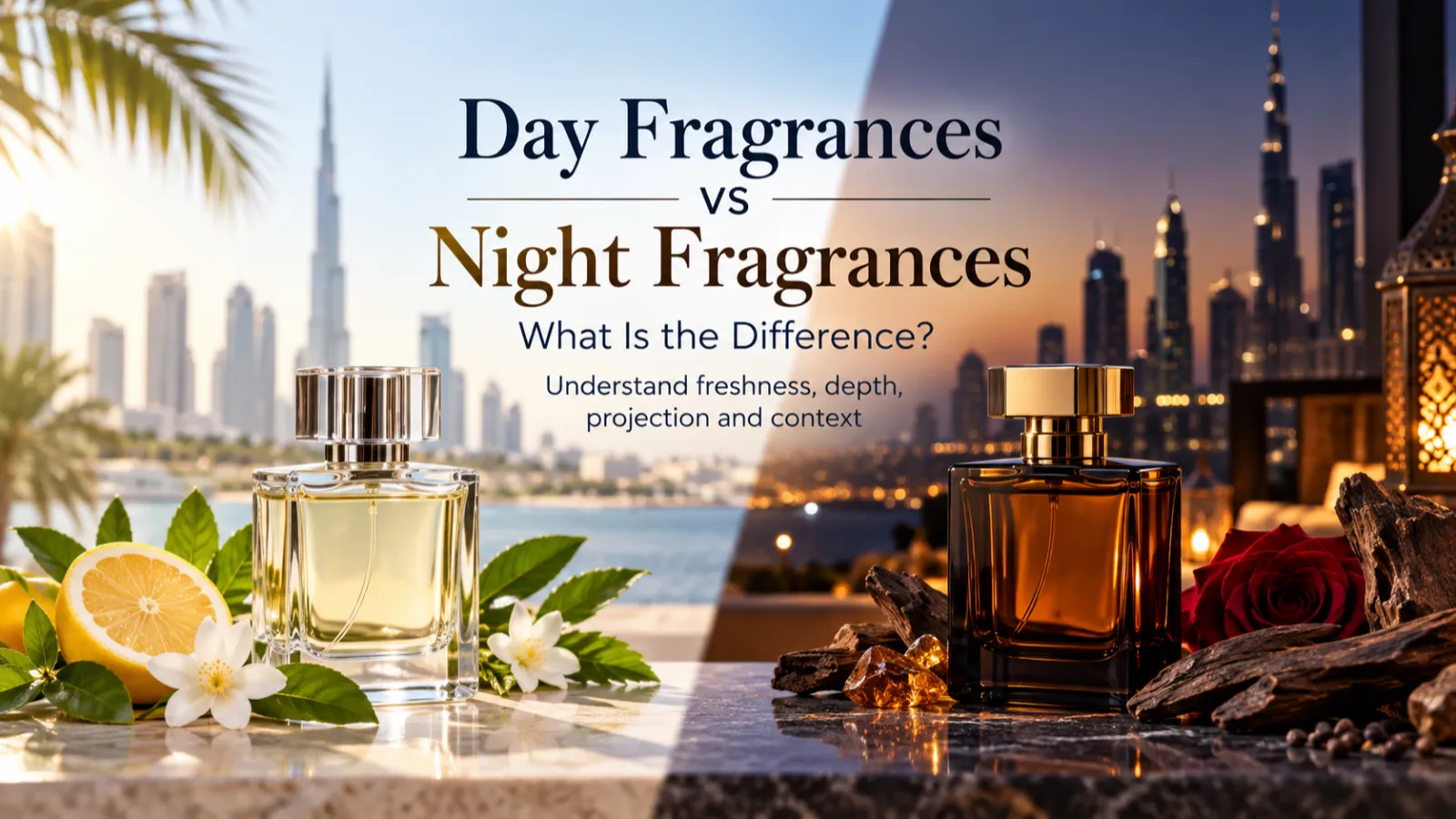
Advice about how skin, environment and perception shape fragrance must account for the two environments of a typical day in the Emirates. Outdoors, heat encourages scent molecules to rise and can make sweet, spicy or woody notes feel larger. Indoors, strong air conditioning may cool the skin and reduce diffusion. Humidity, fabric, travel time and the distance between application and arrival all play a part. There is no single spray count that works for every day.
Start modestly and observe. A light application can always be refreshed; an overwhelming one is difficult to remove. For daytime errands or close offices, keep the scent near the body. For an evening event in a spacious venue, a little more presence may feel appropriate. Readers interested in another style can also shop all perfumes before deciding what balance suits them.
Trust skin testing, but make the test fair
When exploring skin chemistry and perfume, paper strips are useful for sorting possibilities, but skin tells the final story. Natural oils, hydration, temperature and products already on the body influence evaporation. Test on a day when you are not wearing scented lotion, deodorant or another perfume near the area. Spray from a normal distance and do not rub the spot; friction does not help the fragrance settle and can make the opening harder to assess.
Try no more than two or three candidates in one session. The nose becomes tired, especially around strong woods, amber, musk and sweet materials. Step into fresh air between tests and write a few ordinary words—clean, dry, creamy, formal, cheerful, smoky—instead of forcing yourself to identify every note. Those impressions are often more useful when you return to make a choice.
Match the scent to real routines
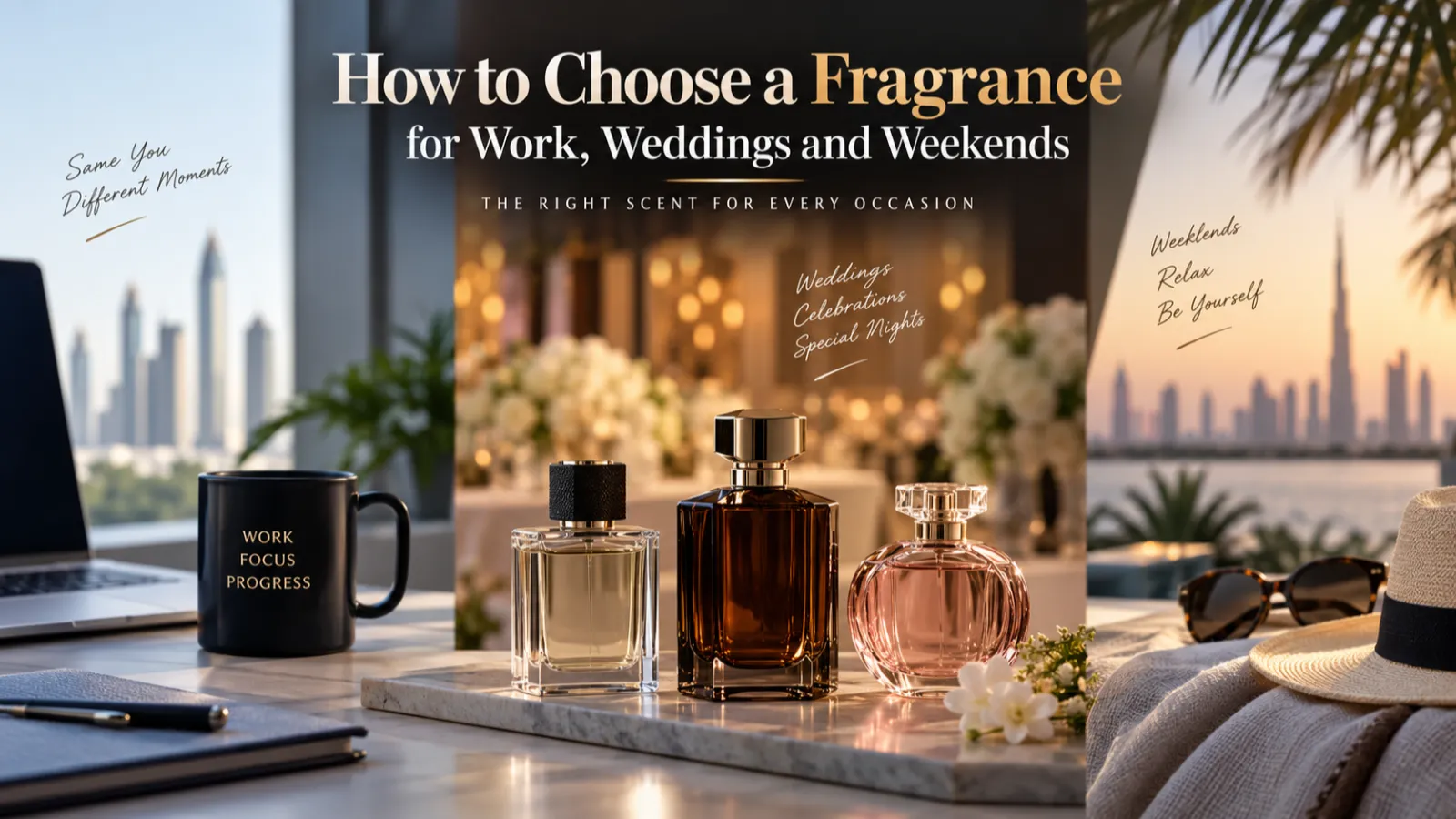
The most useful answer to how skin, environment and perception shape fragrance begins with real life. Imagine the full wearing occasion: the clothes, venue, company, travel and hours involved. A scent for a morning commute has a different job from one worn to a wedding. Neither needs to be better; each needs to be comfortable and appropriate. This practical view also prevents attractive bottles from sitting untouched because they never suit an ordinary day.
Test on clean skin, avoid competing products, and ask for feedback only after the fragrance has settled. When possible, repeat the test on another day. Sleep, weather and expectation affect perception more than most shoppers realise. If a fragrance still feels natural on the second or third wear, that is stronger evidence than a dramatic first reaction. For a sense of the brand and its approach, explore oud fragrances.
Quality is more than loudness
In any discussion of skin chemistry and perfume, projection and longevity matter, but they are not the same as quality. A well-made close-wearing perfume can be ideal for work, prayer, travel or dinner. A powerful scent can be impressive yet tiring if the wearer constantly notices it. Look for a pleasing transition, balance between parts and a dry-down you enjoy. The best performance is performance that suits the purpose.
Be cautious with online claims based on exact hours. Skin, weather, batch age, storage and even how recently a person has smelled the fragrance can change the report. Use reviews to identify patterns, then test for yourself. If several people describe a scent as dense or intimate, treat that as a clue—not a guarantee of how it will behave on you.
Common mistakes to avoid
Three mistakes appear repeatedly: Calling a perfume faulty after one test; comparing indoor and outdoor wear directly; adding sprays because of nose fatigue. Another is trying to force a fragrance to match an identity that feels unnatural. Perfume should support the wearer, not become a costume that demands constant attention.
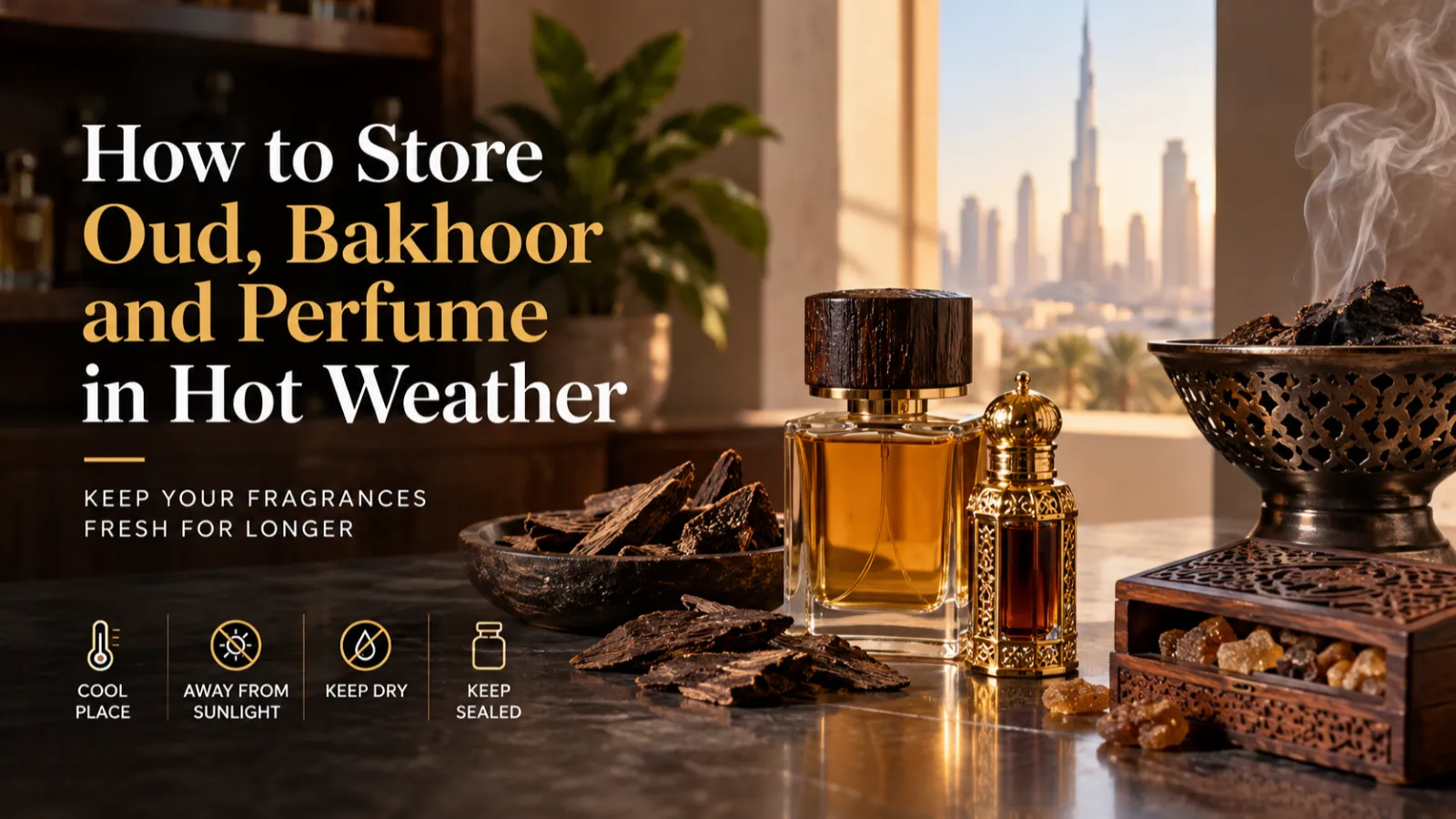
Good skin chemistry and perfume decisions can be undone by poor storage. Keep bottles upright, tightly closed and away from windows, bathrooms and parked cars. A shaded cupboard with a steady indoor temperature is usually enough. Careful storage protects the scent you selected and ensures future tests are meaningful.
A simple way to decide
Reduce the choice to three questions. Do I enjoy the fragrance after the opening? Does its strength suit the places where I will wear it? Would I reach for it on an ordinary week, not only in an imagined special moment? A clear yes to all three is a better buying signal than novelty alone.
Why the Same Perfume Smells Different on Different People is ultimately a personal subject, but the process need not be mysterious. Test slowly, notice context and keep your own comfort at the centre. That approach produces a collection with fewer mistakes and more bottles that become part of everyday life.
Frequently asked questions
How long should I test a perfume before deciding?
Wear it for at least one full day and, ideally, on two separate occasions. This shows the opening, heart, dry-down and how it behaves in different surroundings.
Is testing on paper enough?
Paper is useful for creating a shortlist, but skin testing is important before buying. Warmth, moisture and personal products can change how the fragrance develops.
How many perfumes can I test at once?
Two or three is sensible. More can cause scent fatigue and make similar fragrances difficult to compare accurately.
Should I choose the fragrance that lasts the longest?
Not automatically. Choose a performance level that suits the occasion and remains comfortable. Balance and an enjoyable dry-down matter as much as hours.
Can I wear the same perfume throughout the year?
Yes. Adjust the number and placement of sprays for heat, humidity and indoor air conditioning. Some people still prefer lighter summer choices and richer winter scents.